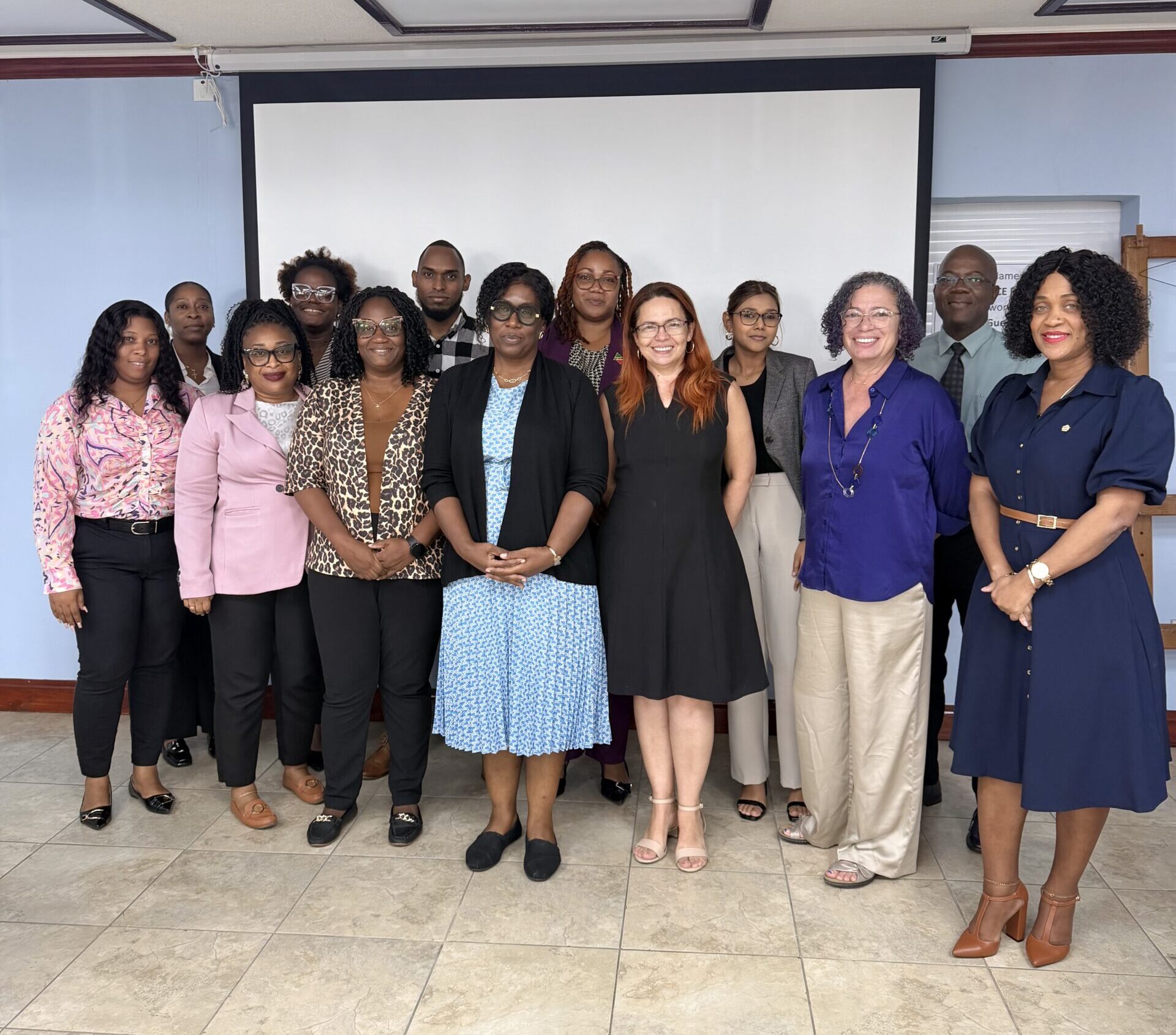
Basseterre, St. Kitts – The Attorney General’s Office and Ministry of Justice and Legal Affairs, in partnership with the United Nations Development Programme (UNDP), continued the phased rollout of its justice sector institutional capacity building programme with a second targeted training session on January 22, 2026, at the Customs and Excise Department.
Building on the initial engagement earlier this week, extended the training to additional Government entities, ensuring they received the same foundational training, aimed at strengthening professional conduct, accountability, and workplace standards across the public service.
The session brought together officers from the Office of the Director of Public Prosecutions, Ministry of Employment and Labor, Ministry of National Security, and the Government’s Human Resources Department, reflecting a coordinated cross- sector approach to justice reform and organisational culture improvement.
Like the first engagement, the workshop was anchored in the Ministry’s Access to Justice Agenda and its broader commitment to democratising access to justice, recognising that fair and effective justice systems begin with safe, respectful, and well- governed internal work environments. The training also explored the link between internal workplace practices and public trust within the framework of the Sustainable Island State Agenda, underscoring that institutions charged with upholding justice, labor protections, national security, and human resource governance must themselves model accountability, fairness, and respect.
Participants engaged in focused discussions and practical learning exercises centred on:
- Leadership responsibility in shaping workplace culture;
- Understanding how impact, rather than intention, defines professional conduct; and
- Strengthening internal processes for preventing and responding to sexual harassment.
Through scenario- based group work and facilitated dialogue, participants examined how routine workplace interactions, decision- making practices, and managerial responses influence staff confidence, institutional cohesion, and service delivery. Emphasis was placed on recognising behavioural patterns, navigating reporting mechanisms, and reinforcing clear standards of conduct across departments.
The session reaffirmed the Ministry’s commitment to continuous institutional strengthening, recognising that effective justice reform is underpinned by professional, accountable, and people- centred public service institutions.